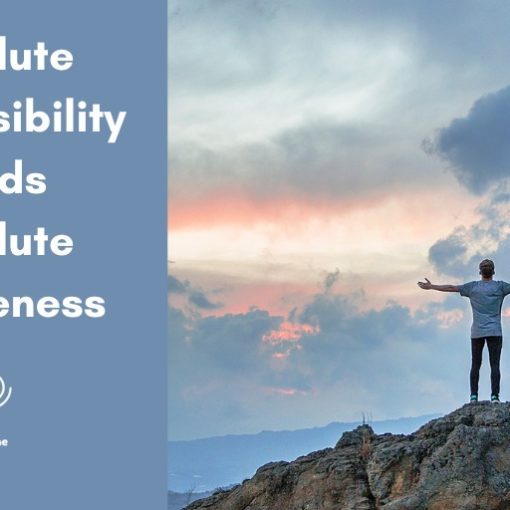

Life can hand us a bunch of unanswered questions and very few answers. But there is something inviting in a question, and so we explore a road less travelled.
When Bob climbed into the passenger seat next to me, I could see that something was wrong. He wasn’t his normal cheery self. It was as if a question had gripped his thinking.
Have you ever had that experience? Something has happened in your life, and now, in a state of shock, you are consumed with trying to understand it.
In this post:
- A closet full of unanswered questions
- Many questions, few answers: Job and Ecclesiastes
- When God answers our questions with questions
- The fire-scorched adult you are becoming
- Spiritual formation and a good question
A closet full of unanswered questions
If you have lived for a few years, you most likely have a closet full of questions. It’s that place where you store away the questions no one has answered yet.
Or maybe someone did answer them, but not to your full satisfaction.
I’m talking about questions of the heart.
Perhaps the answer you were given was glib. It was a nice, pretty, sterilized bandaid, used to avoid exposure to the rawness of the pain.
After all, few of us genuinely want to hear the rawness of another’s pain. We don’t even want to go near our own.
Many questions, few answers: Job and Ecclesiastes
The older I get, the more I find that I have many questions and few answers.
Recently I have been listening to Job and Ecclesiastes on the Daily Audio Bible podcast. Now there are a couple of books that inspire joy and overflowing positivity!
Job sits in torn clothes in a pit of ashes. Loss has turned his world upside down and shaken it to its core.
But why? He questions everything, especially God. Meanwhile, his so-called friends question him and offer their less-than-helpful answers. Their logic sounds a lot like the voice that still whispers, is this suffering a punishment from God?
The writer of Ecclesiastes, on the other hand, seems stuck in a well of hopelessness.
“Utterly meaningless! Everything is meaningless.”
Ecclesiastes 1:2 (NIV)
How about that as a sales pitch for success!
When God answers our questions with questions
One of the delights of the book of Job is how God responds to Job and his friends.
Job asks questions. God responds with questions.
No one could answer the questions God asked Job. You couldn’t put them in a box and say, ‘There, I have the answer.’
Where were you when I created the earth? Tell me, since you know so much!
Who decided on its size? Certainly you’ll know that!
Job 38:3–5 (The Message)
So God invites Job to see his questions in the context of something bigger than himself. There is a larger story going on, and we are invited to be part of it.
You don’t need the answers to gain entry.
In fact, people with questions are more likely to hear the bigger God questions. These are the questions that truly matter, because they shape and form our wholeness.
The fire-scorched adult you are becoming
Every one of us will, at some stage, go through a Job experience. It might not be as dramatic as Job’s loss of family, wealth and health. Still, we will all taste the ashes of loss.
It could be betrayal in a marriage or the death of a friend. Perhaps it’s the loss of a job or a crippling car accident. Or cancer eating your body and fire burning your house.
There’s a mill, a grindstone, a storm and a place of fire that we all pass through. Everything there seems meaningless and hopeless.
Then comes an invitation to reassess all that you have believed in.
- Is God good?
- Am I loved?
- Do I have worth?
- Is it OK to change some of my beliefs?
Perhaps the place that gave you the answers as a child no longer provides answers for the fire-scorched adult you are becoming. That’s often when people feel stuck in a stage of faith, and they need gentle company to take the next step.
Rebuilding trust with new evidence
I once pastorally coached a man with a severe addiction problem. His wife had had enough, and she told him the marriage was over.
He was in the fire of change, and he didn’t like the taste.
He asked what he should do. So we talked about her past. She had suffered abuse and needed a deep sense of security. The facts were that he was untrustworthy and had abused her trust.
That’s why his everyday behaviour had to give her new, factual evidence that he was doing things differently. After all, trust grows from what we can see.
So he became religious, in a good sense, about creating new habits. He did it for himself first. The change was for his own sake, and if it restored his marriage, that would be a bonus.
He questioned his beliefs and didn’t like the answers. But together we rebuilt his life, and in time his marriage healed.
Spiritual formation and a good question
I want to listen to people with questions. I probably don’t have the answers, but the joy is seeing that they are actually questioning things. That’s why I value empowering questions that open the heart rather than demand an answer.
On the other hand, some people just accept everything. They drift along in a trance of what others tell them, with little desire for growth or depth. For them, the power contained in a good storm or fire has left no maturing mark.
Spiritual formation happens at the crossroads where there is a question.
Do I explore the road less travelled? Or do I take the familiar but old and less-than-satisfying route?
As Parker Palmer would say, we need to “hear each other into deeper speech.”
So, Bob, can I ask you something?
Questions? Comments? Email me 🙂📨 [email protected]
Quotes to consider
- When you speak to me about your deepest questions, you do not want to be fixed or saved: you want to be seen and heard, to have your truth acknowledged and honored. Parker J. Palmer
- It is usually most helpful to ask questions that are more about the person than about the problem. Parker J. Palmer
- There are questions which illuminate, and there are those that destroy. We should ask the first kind. Isidor Isaac Rabi
Questions to answer
- Do you have a closet full of unanswered questions? Ones you have stored away, but which now and then make an unwelcome appearance? What are they?
- Under one question, there may well be other questions. What is the question under the question that simply needs to be acknowledged?
- What shapes us more: our questions or our answers?
Further reading
- Is This Punishment from God? — Are your struggles payback for past mistakes? Unpack the story of Job and discover why your suffering is not a punishment from God.
- God, I Still Have Doubts: Where Faith and Doubt Meet — Faith and doubt can live together. Even the disciples doubted. Calm your emotional brain and build a memorial.
- Are You Stuck in a Stage of Faith? — They were stuck. Stuck in a Stage of Faith, but with help and gentle curiosity, they were able to take that next step towards wholeness.
- The Real Problem — Stop chasing short-lived quick fixes. Explore the iceberg metaphor of the soul to find and heal the real problem hidden under the surface.
- The Beauty of an Empowering Question — Harsh questions crush the soul, but empowering questions heal. Learn how walking beside others with gentle curiosity opens up the heart.
- Recovery Starts With a Question Being Asked — Recovery begins when someone asks a deep question. Discover Nehemiah’s example of vulnerability and why honest questions matter for healing.
By Barry Pearman
Photo by xandtor on Unsplash
About the Author

Since 1995, Barry Pearman has worked as a mental health support worker, community chaplain, and pastor, and has walked through depression himself. His training includes SoulCare Foundations under Dr Larry Crabb, a Bachelor of Applied Theology, spiritual direction training, and certificates in CBT interventions, pastoral therapy, and integrated mental health care. Turning the Page offers a grace-filled path to mental wholeness through faith and hope. Read more about Barry Pearman’s story and training.
Get two free ebooks: one on finding help with depression and one on spiritual exercises for your mental health.