
Change is most fragile at the very beginning. If we can catch the little foxes that spoil the vine, the subtle saboteurs that kill new growth, the blossom has a chance to become a harvest.
In this post:
- Why new change is so vulnerable
- The little foxes that spoil the vine
- Nehemiah and the saboteurs of the rebuild
- Do you have a mind to work?
- Naming your own little foxes
Why New Change Is So Vulnerable
It’s spring here in New Zealand, and for grape growers, it’s the riskiest time of the entire year.
The tender little flowers are vulnerable.

They don’t look like normal flowers, do they? But these spiky little blossoms, once pollinated, will develop into delicious grapes.
The greatest fear of a grape grower at this time of the year is frost. Hard, cold ice can freeze the flowers, burning their potential.
We are most vulnerable in the early stages of change
Have you ever noticed that when you want to change, it’s in the very early stages of the process that you are most vulnerable to sabotage? Either self-sabotage or sabotage by others.
You have an idea, and immediately a self-sabotaging thought happens. The blossom is destroyed.
You mention a potential change, and someone comes along and throws a wet blanket of doubt or criticism over it. The blossom of hope withers and drops to the ground.
I have learned to be very selective about whom I share my life with. (Joseph learned this the hard way, as I explore in what Joseph’s pit teaches us about sharing our dreams.)
An idea blossoms. It’s at risk of being frosted or attacked by disease, so I share it only with those who I know will nurture it with as much love and care as I have.
Common saboteurs of change
Saboteurs of our change can come in all sorts of forms:
- Old thinking habits (see how daily rehearsal can retrain old thinking tracks)
- Friends
- Family
- Spiritual forces (Ephesians 6:12)
What comes early in your change process to destroy the potential harvest?
Perhaps it’s like a little fox.
The Little Foxes That Spoil the Vine
There is a little poem in the love story of the Song of Solomon.
the little foxes,
that ruin the vineyards—
for our vineyards are in blossom.’ Song of Solomon 2:15
There is a tenderness in this proverb.
The vineyard is in blossom. The potential of an abundant harvest is laid out, but it’s at risk.
The saboteur is a little fox.
A little fox could come and eat the bark of the vine and ruin the potential of what could happen.
Protecting the early days of love and commitment
The Song of Solomon is a love story. It speaks poetically of the romance between two young lovers.
Early in a relationship, things can be tender. Words said can be misinterpreted and false conclusions reached.
It’s in the early days, as we are establishing a connection to shared values and beliefs, that change is vulnerable. In the early days, we have to ‘catch the little foxes’, the subtle saboteurs that would sneak in and try to destroy the flowering of commitment and love.
This early stage of commitment was so important that a law was given to protect this relationship vine.
Nehemiah and the Saboteurs of the Rebuild
One of my favourite stories of rebuild and recovery is the story of Nehemiah rebuilding the walls of Jerusalem.
In this story of recovery, there are little foxes. The subtle and the not-so-subtle saboteurs. Every one of them was there to destroy the rebuild.
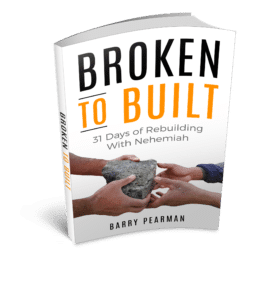
I write about each of them in my book, Broken to Built: 31 Days of Rebuilding with Nehemiah. Nehemiah’s wall is also a picture of healthy boundaries, which I explore in I’m Building a Wall: setting boundaries in relationships.
Here is one of the saboteurs:
When you are mocked for starting something new
Have you ever started out on something new and then been mocked, ridiculed, or shamed?
Have you ever told yourself, ‘What a waste of time’?
Perhaps others have told you that.
I’ve had that said to me about my writing. It hurt, but it was a little fox, so I caught it and threw it out of my vineyard. (If shame is being thrown at you, read what to do with shame slingers.)
Nehemiah’s saboteurs were sending out sabotage messages through the social media grapevine of their day.
This was a constant challenge for Nehemiah: to catch the little foxes and stop them from getting into the heart motivation of the people.
The wall was completed because the people had ‘a mind to work’.
Do You Have a Mind to Work?
Do you have ‘a mind to work’?
Most people don’t.
After nearly 30 years of this kind of ministry, I have met only a handful of people who have truly dedicated themselves to the work of deep soul change. (I’ve written more about this in why in recovery you have to do the work.)
Most people’s progress gets nipped in the bud by little foxes. Little saboteurs. Little fears and challenges.
All of them need to be caught and sent away.
The good news is that the work happens in small, consistent steps. Nehemiah’s wall was finished in just 52 days, which is the idea behind 52 days to better mental health through consistent habits. And nobody builds alone; see why recovery is a fight we fight shoulder to shoulder.
Naming Your Own Little Foxes
What are your little foxes?
You want to make a change, but an old thought pattern clicks in. The blossom withers away.
You share a desire to change with someone, and immediately they list all the problems. The blossom withers away.
The change you want to see feels like a giant mountain, and you feel like a little hobbit. The blossom withers away.
People from your past throw ghost echoes at you: ‘What you’re building, a fox could walk on it and it would fall over.’ The blossom withers away.
Sometimes the fox is a fear of who we might become if the change actually takes hold. I explore that in are you afraid of who you’re becoming?, and the inner saboteur more fully in do you self-sabotage?
Perhaps you need to catch the little foxes.
A Prayer Poem: Catch My Little Foxes
Help me catch my foxes
Those that want to destroy the vine
They sneak in like a saboteur
All subtle and sublime
Help me to see that furry cuteness
Has a sinister motive in store
To take what you have planted in my soul
To steal, kill and destroy
I will catch the little foxes
I will grab them by the tail
Throw them out of the vineyard
Let them weep, let them wail
Grow the harvest God
From blossom until harvest full
Keep me ever vigilant
For enemies coming through
I am building a Jerusalem wall
Making something new
Out of tired old rubble
Rejected by many but not by you
Help me build a new life
Each stone known by you
Build me with a neighbour
Blossomed harvest growing through
Barry Pearman
Quotes to Consider
- There are two kinds of people, those who do the work and those who take the credit. Try to be in the first group; there is less competition there. Indira Gandhi
- People who say it cannot be done should not interrupt those who are doing it. George Bernard Shaw
- We ourselves feel that what we are doing is just a drop in the ocean. But if that drop was not in the ocean, I think the ocean will be less because of that missing drop. Mother Teresa
- Your friends will stretch your vision or choke your dreams. Anonymous
Questions to Answer
- Can you identify the little foxes that sabotage your hopes of change?
- Are there any particular people who subtly or overtly sabotage your life?
- Why do so few people ‘do the work’?
Formation Exercise
Name the little foxes. Get a little notebook and observe any little distractions, fears, or worries that appear in the vineyard of your mind when you start to think about change. Name them. Write them down. Catch them. What are you going to do with them? Feed them or starve them?
Further Reading
- Joseph Was Thrown In A Pit. Why? — Joseph’s pit wasn’t the end of his dream. Learn how God uses our deepest regrets and “pit” experiences to craft us for a greater future.
- Are You Afraid of Who You’re Becoming? — Afraid of change? Discover why the fear of becoming your true self is normal and how faith, failure, and community help you move forward.

- 52 Days to Better Mental Health — Miracles happen in the small steps. Discover how 52 days of consistent building can rewire your brain and transform your mental health.

- Your Rehearsal can Change your Mind — Train your brain with positive self-talk. Learn how intentional daily rehearsal can break old thinking tracks and help you overcome anxiety.

- I’m Building a Wall — Is your inner beauty being trampled? Discover the wisdom of Nehemiah’s wall and why rebuilding your boundaries is a vital act of recovery.

- Shoulder to Shoulder The Fight is Real — Mental Health is a battle. a fight that must be fought with the help of others. Shoulder to shoulder the fight is real
- Get a copy of Broken to Built: 31 Days of Rebuilding with Nehemiah
- Do You Self-Sabotage?
- I Say ‘Resurrection’ to the Mocker
- In Recovery You Have to Do the Work
- What to Do With Shame Slingers
About the Author
Barry Pearman has spent almost 30 years as a mental health support worker, community chaplain, and pastor, and has walked through depression himself. His training includes SoulCare Foundations under Dr Larry Crabb, a Bachelor of Applied Theology, spiritual direction training, and certificates in CBT interventions, pastoral therapy, and integrated mental health care. Turning the Page offers a grace-filled path to mental wholeness through faith and hope. Read more about Barry Pearman.