In short: Psalm 23’s “table” isn’t a dinner table — it likely pictures a “tableland,” an elevated, predator-free plateau a shepherd clears in advance so his flock can graze safely. The verse is a picture of God’s providence: preparing what we need before we even arrive at our need, even in messy or anxious seasons.
Contents
- What Does “You Prepare a Table Before Me” Mean?
- What Does Psalm 23 Actually Say?
- What Sheep Farming Taught Me About Preparing a Table
- What Is a Biblical “Tableland,” and Why Does It Matter?
- A Poem: You Go Ahead
- What Do Other Christian Writers Say About Trusting God?
- A Formation Exercise: Noticing God’s Provision
- Frequently Asked Questions
- Further Reading
What Does “You Prepare a Table Before Me” Mean?
A friend recently sent me a job offering: to come to a town called Echuca in Victoria, Australia, and be a snake catcher.
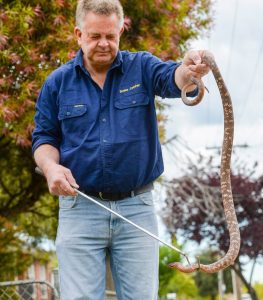
Yes, you read that right. Snake catcher.
My friend works as a caretaker at a local school, and part of his job is keeping the grounds safe for children — which means he’s regularly on the lookout for snakes.
To keep the children safe, he acts intentionally: he clears away areas where snakes might want to live, he installs nets and fences to stop snakes entering the grounds, and he prepares a safe place before anyone arrives.
I like this illustration.
It’s a picture of providential care — someone going ahead of you to prepare a place, before you ever get there.
Have you ever had someone prepare somewhere safe for you? Say you’re going to stay overnight with Aunt Mildred. She’ll likely make the bed, prepare some food, and (especially in Australia) get rid of any snakes, before you arrive.
When you walk in, you’re welcomed into what’s already been prepared. You might feel a little embarrassed by the fuss, but ultimately you feel cared for, loved, and safe. That is close to what Psalm 23:5 is describing about God.
What Does Psalm 23 Actually Say?
Psalm 23 is probably the most-read psalm in the Bible. It has brought comfort and hope to millions of people since it was written by a shepherd boy in ancient Israel roughly 3,000 years ago.
He makes me lie down in green pastures;
he leads me beside still waters;
he restores my soul.
He leads me in right paths for his name’s sake.
Even though I walk through the darkest valley, I fear no evil;
for you are with me;
your rod and your staff—they comfort me.
You prepare a table before me in the presence of my enemies;
you anoint my head with oil; my cup overflows.
Surely goodness and mercy shall follow me all the days of my life,
and I shall dwell in the house of the Lord my whole life long. — Psalm 23
At the time it was written, this pastoral scene of shepherding care would have been deeply familiar to the original listeners. Few of us today have any direct connection with sheep — which is part of why the “table” image gets misread as a literal dinner table rather than the shepherding picture David intended.
What Sheep Farming Taught Me About Preparing a Table
My very first job after leaving school was on a sheep farm. The farmer asked me to monitor the level of a fungus called Pithomyces chartarum growing in the pasture.

This fungus grows at the base of the pasture in warm, moist weather, and releases spores containing a destructive toxin called sporidesmin. When sheep eat it, the spores damage the animal’s liver, causing the facial skin to peel off, along with severe swelling, droopy ears, and intense restlessness. It’s a horrible condition to witness.
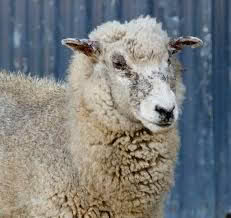
My task was to collect soil and grass samples from the pastures, then count the spores under a microscope, to determine whether a paddock was safe for sheep to graze. In essence, I was checking for microscopic snakes. I was preparing a place for vulnerable sheep to graze safely. I was preparing a table.
What Is a Biblical “Tableland,” and Why Does It Matter?
A popular reading of Psalm 23:5 treats “table” as a literal dinner table. Yet I have never seen a sheep sit at a table.
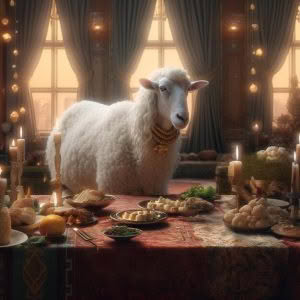
AI gives us another fake image!
David, the shepherd boy who wrote this psalm, was likely playing with words, since he would have been intimately familiar with “tablelands.” According to Bible Hub’s entry on table-lands, these elevated plateaus carried real spiritual weight in the ancient world:
- They symbolize stability, abundance, and divine provision.
- Their elevated nature represents closeness to God and a refuge of security.
- They offer a protected, fertile plateau safe from hidden predators.
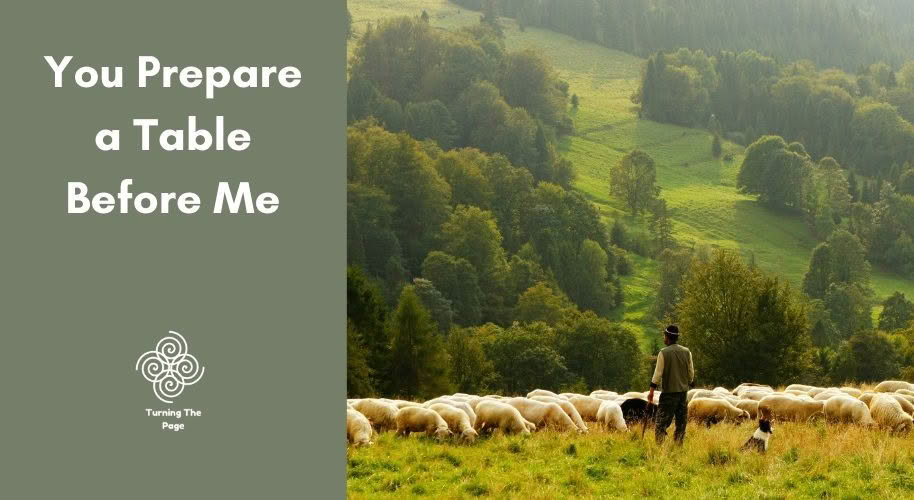
A good shepherd goes ahead to “prepare the tableland”: water holes are cleared, poisonous weeds uprooted, predators and snakes removed — all done in full view of those very enemies.
This is the picture behind “you prepare a table before me in the presence of my enemies.”
It’s not a lavish banquet in the style of prosperity teaching. It’s the simple, sufficient provision of what’s needed for the day: what has the shepherd already prepared, in advance, to meet my exact needs today, and what is he doing right now for my tomorrow?
Blessed are you who run to him.
Worship God if you want the best;
Worship opens doors to all his goodness. — Psalm 34:8-9 (MSG)
A Poem: You Go Ahead
You go ahead
A pathway to clear
You go ahead
A table to prepare
It’s a flat place
Where I can rest
Free of all predators
Table land souls request
You’re freeing that place
Of wolves and snakes
You’re going ahead
There’s no mistake
You’re right beside
Rod and staff comfort still
I look back
And see where you’ve been
It’s a millimetre walk
To change my point of view
I’m stubborn and resistant
Old Ram Old Ewe
May I see
In evidence today
How you’ve stepped out in front
Preparing me the way
I will focus my attention
On gifts given today
Thanking you for manna
Left along the way
Help me to trust
You’ve got it all in hand
You’re going ahead
Predator free flat land
You go ahead
You prepare a place
Help me see today
Your providential grace
What Do Other Christian Writers Say About Trusting God?
- “You have made us for yourself, Lord, and our hearts are restless until they rest in you. Spirituality is about what we do with our unrest.” — Ronald Rolheiser
- “Control eventually gives way to mystery and the letting go of control. Suddenly, we are not in charge.” — Richard Rohr
- “Comfort is the absence of tension; growth requires a swim in murky, dangerous waters.” — Dan Allender
- “Any approach to life that doesn’t center in trust eventually produces misery.” — Larry Crabb
- “Too often, our version of trusting God carries with it an expectation of what God should do… An honest look at what we mean when we use the word trust would likely turn up a subtle demand, a stubborn sense of entitlement to whatever good things we’d like God to give us.” — Larry Crabb
- “In trust, we open our hearts and experience God’s love, which overcomes fear and enables us to give rather than constantly seek to get.” — Timothy R. Jennings
- “When you stand before Me in mystery, you will eventually rest within Me in trust. When you can’t figure Me out, you will give up the illusion of predictability and control and discover the joy of freedom and hope.” — Larry Crabb, 66 Love Letters (Job)
A Formation Exercise: Noticing God’s Provision
Looking back, how has the Good Shepherd prepared a table for you — right now, in the present? Count your blessings, naming them one by one, but focus specifically on the small, subtle ways God has provided the simplest of things.
Reflection questions:
- What would it be like to have someone go ahead of you and prepare a place where you could eat, drink, rest, and sleep in perfect safety?
- Jesus said: “Do not let your hearts be troubled. You believe in God; believe also in me. My Father’s house has many rooms; if that were not so, would I have told you that I am going there to prepare a place for you?” Do you think Jesus might be pointing back to Psalm 23 as another sign of his providential care for us?
- When someone is coming to visit you, do you prepare in advance? Why?
Frequently Asked Questions
What does “you prepare a table before me” mean in Psalm 23?
It’s a picture of a shepherd going ahead of the flock to prepare a safe, elevated grazing plateau — clearing water holes, removing poisonous plants, and driving off predators — before the sheep ever arrive. It represents God’s provision being made ready in advance of our need, not just in response to it.
What is a “tableland” in the Bible?
A tableland is an elevated, flat plateau. In the ancient Near East, these plateaus offered stability, fertile grazing, and natural protection from predators, which is why they became a symbol of divine provision and refuge in Hebrew poetry.
How does Psalm 23 help with anxiety about the future?
Psalm 23 reframes anxiety about the future as a question of trust in a shepherd who has already gone ahead. Instead of asking “what if nothing is prepared for me,” the psalm invites the reader to ask what the shepherd has already prepared, in advance, for today’s specific need.
Is the “table” in Psalm 23 a literal dinner table?
Most likely not. Sheep don’t sit at dinner tables, and David — a shepherd himself — was almost certainly using “table” as a play on words pointing to a tableland, a safe grazing plateau, rather than a banquet table.
Further Reading
- When One Door Closes: Finding Hope in the Providence of God — When one door closes, we often stare at it with regret. Discover how to navigate the “liminal space” and trust in God’s providence for what’s next.
- Jehovah-Jireh: Finding Relief from Tension — Feeling the weight of life’s tensions? Discover how Jehovah Jireh “sees to” our struggles, offering providential relief in the dissonance.
- What Restores the Soul: The Three ‘P’s’ — Feeling empty and exhausted? Discover how God uses people, places, and practices to breathe life back into a weary, burnt-out soul.
- Your Brain Needs to Rest Beside Still Waters — Is the noise of life concussing your soul? Discover the “still waters” of Psalm 23 and how a flow of peace can restore your tired brain.
- Can You Pray For Me? How to Pray with Depth and Intimacy — How do you respond when someone asks, “Can you pray for me?” Discover a deeper way to pray using templates of intimacy and millimetre focus.
- David Strengthened Himself in the Lord and How You Can Too — Find strength in life’s storms. Learn how David strengthened himself in the Lord and how you can build daily spiritual resilience.
Barry Pearman is a former Community Chaplain and Mental Health Support Worker who has spent over a decade pastoring people through anxiety, depression, and major mental illness. He holds a Bachelor of Applied Theology from Carey Baptist College and trained under Dr. Larry Crabb through SoulCare Foundations and the School of Spiritual Direction. Barry writes at Turning the Page to help people walk a grace-filled, “millimetre step” path to mental and spiritual wholeness.
Photo by Biegun Wschodni on Unsplash