Lose your true self to others? Explore the cup metaphor of self-love, break codependency patterns, and embrace how God uniquely made you.
It was a gradual decline. Slowly they lost interest, but like a boulder rolling down a hill, it gained momentum until it was seemingly unstoppable.
They had lost interest in the self.
No longer interested in what they wore, nor regarding whether what they ate had any flavour or nutritional value, the self had, for all intents and purposes, lost any sense of life.
What is the self?
In essence, it’s who you are separate from anyone else. It’s the unique qualities of your personal expression.
In an over-saturated world of media bombardment, I wonder if we lose our sense of uniqueness to a commonness.
A commonness is easier to market to. A commonness says, “This is who you are, and this is what you should do.”
But who are you? What makes you divinely different from others?
We can so easily allow ourselves to be morphed into something that has been defined by others. We conform and we norm. Our ‘self’ can simply become an expression of a community that we are part of.
As an extreme, I think of those who are part of a cult or a sect. They are told they have to wear certain clothes, act in certain ways, and believe certain things. There is a loss of individuation. The ‘self’ conforms and constrains itself into the norms of the group.
But, “Who are you?” I want to ask.
Our ‘self’ gets bound up with the norms of the group. We “tight dance” to the conformity of others’ opinions. ‘Self’ is lost to the compliance of others’ needs, used at the behest of others.
But I look at you and see someone “fearfully and wonderfully made” (Psalm 139:14).
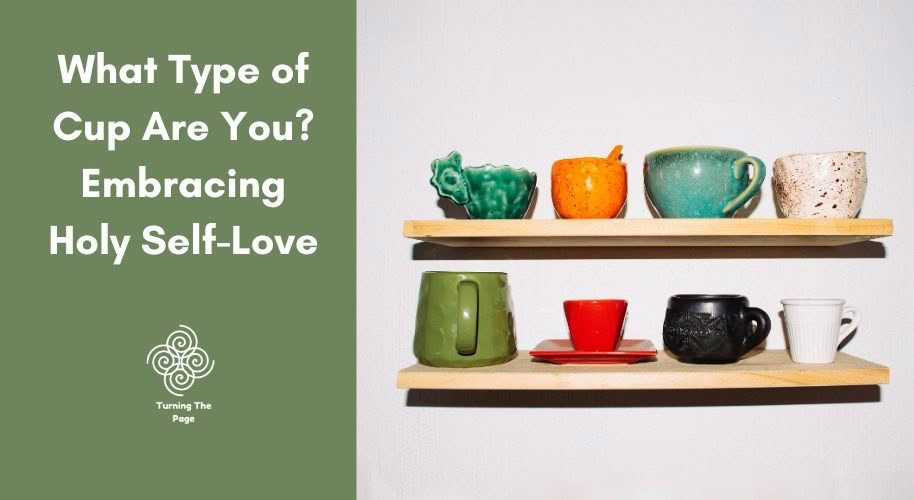
What type of cup are you?
I recently asked someone who I was in a soultalk conversation with this question: What type of cup are you?
They looked at me kind of strange, so I went on to explain how a cup can be a metaphor for our lives:
1. Tin cups: An indestructible cup. Throw it on the ground and it won’t break. Basic, solid, dependable. You throw it in the backpack when you go tramping.
2. Royal China cup: Dainty, pretty, fragile, only brought out for special occasions. Perfect for showing off.
3. Basic everyday kitchen cup: Pumped out by the cup factory. It’s practical, functional, and goes unnoticed because it’s much like all the other cups in the cupboard.
4. Mickey Mouse cup: One of those cups that is part of a promotional marketing offer. Everyone knows you’ve been to Disney World because you have that cup.
5. Espresso cup: It’s small and has thick walls to keep the heat of the coffee. Its purpose is obvious.
6. Pen holding cup: It was originally intended for drinking from, but now it holds pens and pencils.
My cup is handmade—uniquely crafted by a divine artisan. The physical body of my cup is 64 human years old now as I write, and it’s both functional and has a special “made in the image of God” likeness to it.
But here, I am not so much talking about only the body (flesh and bones) but more about the whole self. The essence of who I am.
What does biblical self-love actually look like?
When we are navigating self-care and mental health as a Christian, we need to understand some biblical truths.
Self-love is not narcissism. Narcissism is self-worship.
True self-love is an acceptance that maybe the cup has cracks in it, and those cracks need acceptance, care, and tenderness. We are made of dust and clay, much like a cup.
Self-love withdraws the cup from constant pouring out so that it may be filled.
I look to Jesus and his cup—his “self” love acceptance of human fragility. For Jesus, fully human and fully divine, he often withdrew his cup from the thirsty to spend time alone with the giver of life:
-
“And rising very early in the morning, while it was still dark, he departed and went out to a desolate place, and there he prayed.” — Mark 1:35
-
“Great crowds gathered to hear him and to be healed of their infirmities. But he would withdraw to desolate places and pray.” — Luke 5:15-16
At times he would actively hide from those who wanted to kill him:
-
“So they picked up stones to throw at him, but Jesus hid himself and went out of the temple.” — John 8:59
Self-love may actually mean you have to hide. It is not self-absorption.
Some think we are to have a kind of self-hatred and to make ourselves a martyr to the needs of others. But self-hatred is a denial of the beauty God has made in you.
True self-love is accepting that you are deeply valued by God—a unique cup made by God for both containing and sharing. Knowing your cup frees you up to love the world around you.
Can you pull the cup back?
I like to think of my “self” as being like a cup. I have both cup fillers and cup drainers. There are things that fill my “self” and things that drain my “self”.
The cup of “self” is critically important. At times it has been fragile, possibly even cracked. At other times it has been robust and strong.
I am a cup, and I have agency over my cup. I have control over my cup, over my “self”.
I recently had a picture appear in my mind. I was holding my cup out to others, and they were drinking from it. I then tilted the cup back so that they could no longer drink from the cup. I chose to withhold the flow from the “me” to the “we”.
The “cup” or the “self” needed to angle back and away for the flow to stop. I was to simply enjoy the delight of being a cup. To make an infilling a focus.
Jesus did this, and you can too.
Quotes to consider
-
“Codependency is a submission to the needs of others at the expense of one’s own identity.” — Dr. Gabor Maté, When the Body Says No
-
“Some people push me to do better by trying harder. Others draw me to be better by enticing me with an indefinable quality about their lives that seems to grow out of an unusual relationship with Christ, one that really means something.” — Inside Out, Larry Crabb
-
“When you’ve learnt to live in grace you’ll no longer need to punish yourself to ‘atone’ for a sense of failure.” — David Riddell
-
“Take care of your body. It’s the only place you have to live.” — Jim Rohn
-
“Humans are not a composite of a number of parts; we do not have a spirit or have a body – we are embodied spirits.” — David Benner
-
“Love yourself as you love others. If you don’t care for your own needs, you’ll soon be unable to care for those who need you.” — David Riddell
-
“Real self-esteem comes from within; it is the existential, spiritual truth that we have value and worth intrinsically, because we are here and breathing, not because of anything we have or can do, nor how others regard us.” — Terrence Real
-
“Do I detect the smell of burning martyr?” — Basil Fawlty (John Cleese), Fawlty Towers
Further reading
Tired of Pretending? Find the Ancient Path to Honesty Tired of pretending instead of being real? Discover the ancient path of honesty — one millimetre step at a time.

- The Cup: Paying Attention to What Fills and Drains
- Am I Codependent? You Can’t Earn Love Here
- Do You Care for Your ‘I’?
- Am I Worthy of Love?
- Crossing Boundaries Crushes the Shape of the Heart
- Better Boundaries?
- Are you helping too much?
- Do you care for your ‘I’?
Barry Pearman