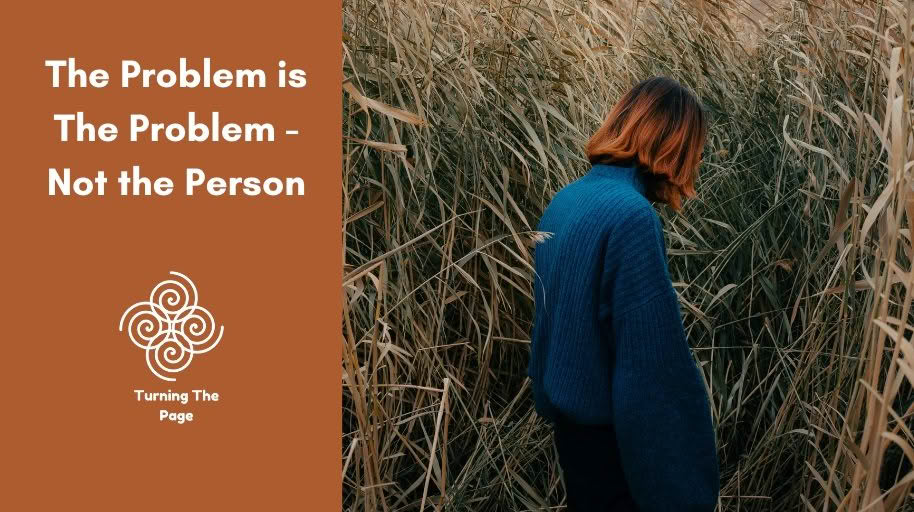

Contention and stress can become too much. Sometimes it is better to live in the corner of a roof, in the simplicity of almost nothing, than in the complexity of strife.
Quick answer: Proverbs 21:9 says it is better to live on a corner of the roof than share a house with a quarrelsome wife. It has often been used as a weapon against women, but it is really about the cost of living with constant contention from anyone: a husband, parent, child, employer or neighbour. Read well, it gives permission to set boundaries, choose simplicity, and find a place of refuge where you can recover from emotional abuse.
In this post
- Battered without a hand being laid
- What Proverbs 21:9 really means
- The corner of the roof in its biblical context
- What finding your corner of the roof looks like
- Reflect and practise
Battered without a hand being laid
I don’t think I will ever get the image out of my memory. She was a battered woman. Maybe, in some ways, she still is.
Her husband had not laid a hand on her, but his words and non-verbals had battered her to a pulp.
She needed a space. Somewhere to recover from the trauma.
Then there was the man I wrote about in She Crossed a Line, a story of public verbal abuse, where a woman publicly humiliated him. Yelling, screaming, and belittling. Her tongue was a weapon of war.
Both these people, I think, would have thought it better to live in the corner of a roof than with their assailant.
What Proverbs 21:9 really means
There is a verse in the Bible that talks about living on a rooftop.
than share a house with a contentious wife. Proverbs 21:9
I want to be very clear here.
I will not bag women in this post.
This particular passage has been used so many times as a hammer on women.
It’s horrific how scripture can be used as a weapon.
This passage could just as easily be read as:
than share a house with a contentious husband, child, employer, neighbour, parent.
This passage is about boundaries, simplicity, self-care, options, and making tough choices. (If the word “boundary” feels cold or clinical to you, I’ve suggested a gentler way to rethink the word boundary.)
So let’s dig a little into the context.
The corner of the roof in its biblical context
Better to live on a corner of the roof
Here is what Bible Hub has to say.
This phrase suggests a situation of extreme discomfort and isolation.
In ancient Israelite architecture, roofs were flat and often used as additional living space.
The “corner of the roof” implies a small, exposed area, vulnerable to the elements.
This imagery highlights the severity of the situation being described.
The Bible often uses the roof as a place of solitude or prayer, as seen in Acts 10:9, where Peter goes to the rooftop to pray.
About noon the next day, as they were on their journey and approaching the city, Peter went up on the roof to pray. Acts 10:9
The emphasis here is on the preference for solitude over conflict, suggesting that peace of mind is more valuable than physical comfort. Bible Hub commentary on Proverbs 21:9
Than share a house with a quarrelsome wife
The “quarrelsome wife” is a recurring theme in Proverbs, symbolizing discord and strife within the household.
Proverbs 19:13 and 27:15 also mention the contentious wife, indicating the disruptive nature of constant conflict.
A stupid child is ruin to a father,
and a wife’s quarrelling is a continual dripping of rain. Proverbs 19:13
A continual dripping on a rainy day
and a contentious wife are alike; Proverbs 27:15
In the cultural context of ancient Israel, the household was the center of life and community.
A harmonious home was seen as a blessing, while a contentious one was a source of distress.
The verse underscores the importance of a peaceful home environment, which is echoed in the New Testament’s emphasis on love and mutual respect within marriage, as seen in Ephesians 5:22-33.
The comparison suggests that spiritual and emotional well-being should take precedence over material or social considerations. Bible Hub commentary on Proverbs 21:9
What finding your corner of the roof looks like
Choosing simplicity over strife
It’s simplicity over complexity.
A simple meal with good friends rather than a banquet of abundance with strife.
It’s a quiet, simple, minimalistic life rather than a gluttonous demand for more.
Walking away from the abuser
It’s quietly saying “No” to the abuser and walking away. If the person dumping on you is family, these are practical ways to set boundaries with a toxic family member. If you are sharing a house with someone who is all about themselves, here are six suggestions for living with a narcissist.
Having a secret place of refuge
It’s having a secret place, known only to a special few, where you can retreat and recover from the war.
It’s a city of refuge. Deuteronomy 19
The cave in the desert. 1 Kings 19:9-18 (I write more about Elijah’s cave in finding God in the sheer silence when He feels distant.)
It’s doing your very best, if it is possible, to live peaceably with all, but knowing you need your own Psalm 23. When you feel tired and weary and in need of refuge, it helps to have prepared your shelter from the storm ahead of time.
Sharing your rooftop with a few safe people
It’s having a few good friends to share your rooftop villa with. Not everyone is safe enough to be invited up the stairs. Here is how to tell who is safe to share your vulnerability with, and what a truly safe place and safe person look like.
Corner Rooftop: a poem
I’m tired of the contention
Tired of all the stress
Tired of living in your harshness
Life was never meant for this
So I’m slipping out the door
Up the stairs I will go
Up there on the roof
Corner shade to know
I see things so much clearer
Away from the contention down below
I want to be much closer
More of you to know
Is this detachment?
Is this leaving them to their load?
Perhaps they need this abandonment
To face their world alone
I have a little corner
I make it just the way I like
This is a place of freedom
Others can take a hike
I live a simple life
Having really not much more
Than the simple pleasures of a simple life
Nothing for me to hoard
You can have your overindulgent banquets
Pizza and ice cream are for me
Find me on the beach
Not in a great banquet hall
You can come up to my rooftop
But please leave your strife below
This is my corner home
You may like to make one of your own
Barry Pearman
Reflect and practise
Quotes to consider
- Non quam late, sed quam laete habites, refert. It’s not how widely, but how happily you live, that matters.
- If it is possible, so far as it depends on you, live peaceably with all. Romans 12:18
- A simple lifestyle is quite simply an act of solidarity with the way most people have lived since the beginnings of humanity. Richard Rohr
- When you agree to live simply, people cease to be possessions and objects for your consumption or use. Richard Rohr
- Simplicity means a return to the posture of dependence. Like children we live in a spirit of trust. What we have we receive as a gift. Richard Foster
- Prayer frees us from anxiety because it teaches us trust. And the result is peace. Prayer and simplicity are intertwined. Richard Foster
- Francis taught us, therefore, that the antidote to confusion and paralysis is always a return to simplicity, to what is actually right in front of us, to the nakedly obvious. Richard Rohr
- If liberty means anything at all it means the right to tell people what they do not want to hear. George Orwell
- Care about what other people think and you will always be their prisoner. Lao Tzu
Questions to answer
- How do you handle contention?
- Have you seen a battered wife, husband, or child? Would you want them to stay in this relationship?
- Do you have a “corner rooftop” retreat place? What would it look like if you did?
Formation exercise
- Consider the role of refuge places in our society. In New Zealand we have an organisation called Women’s Refuge. Who else in your community needs a refuge? A place to hide, rebuild and recover?
If you need help now: In New Zealand, Women’s Refuge runs a free 24/7 crisis line on 0800 REFUGE (0800 733 843). If you are in immediate danger, call 111.
Further reading
- Stop the Dumping: How to Set Boundaries With Toxic People — Were you the family scapegoat? Learn why worth comes before boundaries and a simple script to stop verbal abuse.
- Can you Live with a Narcissist? Six Suggestions — Trapped by a narcissist? Discover 6 strategies to protect your soul, set boundaries, and find a “flint-like focus” on your own spiritual path.

- Throwing Pearls to Pigs: Finding Safe People for Your Vulnerability — Learn why oversharing your deepest struggles with the wrong people hurts, and how to find safe people who honour your vulnerability

- I Need a Safe Place — Discover how to build safe spaces and practice unhurried listening. Learn to avoid fixing others and cultivate a truly good soul refuge.

- How to Handle People Who Rain on Your Parade — Someone dismissing your joy or creativity? Why people rain on your parade and 5 faith-based ways to keep dancing.

- Where are you God? — When God feels distant in your pain, God hasn’t moved. Discover how to find Gods whisper in the “sheer silence” even when life is a storm.
About the author
Barry Pearman has spent almost 30 years as a mental health support worker, community chaplain, and pastor, and has walked through depression himself. His training includes SoulCare Foundations under Dr Larry Crabb, a Bachelor of Applied Theology, spiritual direction training, and certificates in CBT interventions, pastoral therapy, and integrated mental health care. Turning the Page offers a grace-filled path to mental wholeness through faith and hope.
Photo by Nathan Dumlao on Unsplash