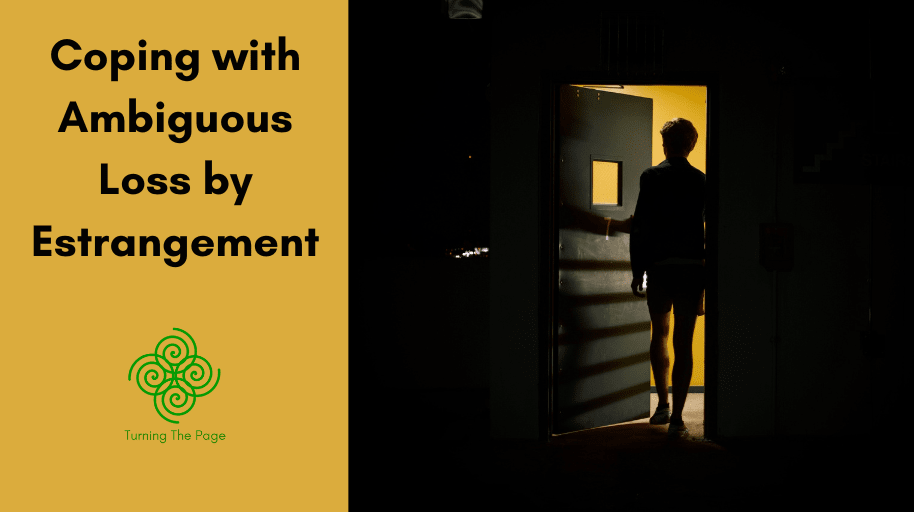
I never saw it coming—the cataclysmic argument that triggered my adult son to estrange me three years ago. I might never see it end—the suffering of ambiguous loss of the relationship without closure.
Quick answer: Ambiguous loss is a type of grief, first named by therapist Dr. Pauline Boss, that happens when a relationship ends without closure — as with estrangement, divorce, or a loved one’s mental decline. Because there’s no funeral or ritual to mark it, the grief has nowhere to go. Healing comes through self-kindness, forgiveness, and finding others who understand this particular kind of loss.
Table of Contents
- What Is Ambiguous Loss?
- What Does Ambiguous Loss From Estrangement Feel Like?
- Why Don’t We See Estrangement Coming?
- How Can You Move Forward After Estrangement?
- Quotes to Consider
- Questions to Answer
- Frequently Asked Questions
- About the Guest Blogger
- Resources & Further Reading
What Is Ambiguous Loss?
Coined by family therapist Pauline Boss, Ph.D., 40 years ago, ambiguous loss refers to unresolved physical or emotional loss, or the loss of a relationship with no closure. This agonizing type of grief typically manifests in two distinct ways.
Physical Absence With Psychological Presence
This occurs when a loved one’s physical whereabouts are unknown, uncertain, or unresolved — such as with missing persons or kidnappings.
Physical Presence With Psychological Absence
This occurs when a loved one is physically near, but emotionally or mentally unreachable, due to conditions like dementia, traumatic brain injury, addiction, or mental illness.
Ambiguous loss can also encompass physical and emotional loss because of divorce, adoption, estrangement, incarceration, immigration, or ghosting. Such loss is especially grievous around the loss of a fulfilling long-term relationship. Such is my circumstance.
What Does Ambiguous Loss From Estrangement Feel Like?
Three years after the meltdown with my 34-year-old son, an occasional flicker of hope for contact, connection, and reconciliation still moves me to reach out. But sadly, my text messages and phone calls go unreturned. My invitations for meet-ups go unacknowledged. And his once frequent reach-outs to check in on me, his mother who raised him as a single parent, are but a distant memory.
No matter the circumstance, the interminable suffering of ambiguous loss defies resolution, creates long-term uncertainty about the relationship, and freezes the grief process. Unlike death, whereby mourners receive confirmation of the loss and support through funerals, burials, and gatherings, none of those rituals exist for unresolved loss.
Why Don’t We See Estrangement Coming?
So often, we who experience estrangement never see it coming. Only after a prolonged silence, separation, and isolation do we realize the exquisitely painful loss of the cherished relationship we once knew. Hence, like an unsuspecting moth captured in a jar, we find ourselves trapped in the suffocating reality of ambiguous loss. We see our human swarm living interconnected lives, oblivious to the invisible suffering separating our reality from theirs.
When stuck in this cycle, we often expend untold energy attempting to escape the misery of separation:
- Bargaining: Yearning to restore the relationship, we resort to bargaining with our Creator, ourselves, and the aggrieved party.
- Defensiveness: In anger, we deny, deflect, defend, and dismiss our role in the conflict.
- Despair: In anguish, we deplete our mental, emotional, and spiritual reserves for coping and descend into hopelessness.
Alas! Like the entrapped moth, whose spirit succumbs to the oxygen depletion, the light of our being fades in the reality of the depleted relationship — the “oxygen” that once breathed life, love, and interconnection into our hearts.
How Can You Move Forward After Estrangement?
How can we move forward amidst the interminable torment of estrangement by a parent, child, or partner with whom we once shared a fulfilling relationship? Here is some insight based on my own experience of ambiguous loss by estrangement.
1. Hold Yourself in Loving Self-Kindness
Your loss is real, and your grief is bottomless. Whether you recognize what caused the shift or have no clue, berating yourself over what you could’ve, should’ve, or might’ve done is moot. As the reality of the estrangement sets in, you may experience recurring bouts of guilt, shame, ignorance, naivete, anguish, anger, sadness, despair, worry, and yearning. Carve out a set amount of time daily to meditate and sit with your feelings in nonjudgmental, loving self-kindness.
2. Forgive Your Loved One
Every human being is flawed, fragile, broken, and wounded. The person who estranged you may have issues of which you are unaware, and they may lack the emotional capacity or maturity for the relationship they once shared with you. Forgive your loved one in your heart and in your prayers. Forgiveness might not heal the estranged, but it can heal us who suffer the estrangement.
3. Forgive Yourself
You are human. Whether it was a series of micro-hurts, a cataclysmic circumstance, or an unknown rift that shifted the relationship, forgive yourself. It takes two people to nourish a relationship and two to make it wither. Forgiving yourself is the first step in arriving at some acceptance and peace in processing the concomitant grief of ambiguous loss.
4. Seek Community
Seek community with others who live with ambiguous loss by estrangement. Like the moth trapped in the jar, we who suffer alienation so often do so in isolation, amplifying the loss of our human interconnections.
5. Move Toward the Light
As the shock of estrangement wanes, gently and with great self-compassion, begin looking at the parts of yourself that reflect your authentic essence. Direct your focus to nurture the best parts about yourself. May you once again find the light of your being through healing, community, and the “oxygen” of new human interconnections.
Quotes to Consider
Questions to Answer
- Ambiguous loss can encompass other types of loss beyond relationships. Have you experienced ambiguous loss around unrealized hopes, dreams, goals, or disappointments? Did you feel isolated in that no one seemed to notice or understand the depth of your grief?
- Have you ended a relationship without offering the other person an opportunity for closure? Over time, have you considered how the other person has processed the unresolved closure, and how you have processed the loss of the relationship?
- Have you considered reconciling with the estranged person directly or indirectly (i.e., through a letter or third party)? What might be your hesitancy or fear?
Frequently Asked Questions
What is ambiguous loss?
Ambiguous loss is a term coined by therapist Dr. Pauline Boss for a loss that has no clear resolution or closure — either because a loved one is physically gone but psychologically still present in your mind, or because they’re physically present but psychologically unreachable.
Is estrangement a form of grief?
Yes. Estrangement is a form of disenfranchised, ambiguous grief. Unlike a death, there’s no funeral, burial, or gathering to mark the loss, so the grieving process has no clear starting or ending point and can feel like it’s frozen in place.
How do you cope with the ambiguous loss of an estranged relationship?
Coping involves holding yourself in self-kindness rather than self-blame, forgiving your loved one and yourself, seeking out community with others who understand ambiguous loss, and gently redirecting your focus toward your own healing and authentic self.
About the Guest Blogger

Peggy M. Phillips is an author writing in the Christian Fiction-Metaphysical genre. Peggy debuted her first work of fiction in November 2022 with the poignant and powerful epistolary novella, “Letters to the Little Flower: The Gift of Spiritual Companionship with St. Therese of Lisieux.” Born in Wichita, KS, United States, Peggy grew up in a large Catholic family in a small Kansas town. A Registered Nurse who works in mental health services, Peggy enjoys hiking the beautiful nature trails of Kansas and spending time with her family.
Resources & Further Reading
- Finding a Lifeline in the Quicksand of Estrangement — Trapped in the quicksand of estrangement? Peggy Phillips shares her journey from the agony of no-contact to an unexpected relationship renewal

- The Inner Groan: Why Do I Feel So Broken Inside? — Feeling broken inside? Discover the birth pangs metaphor from Romans 8 and find hope in the sacred waiting between now and not yet.

- The Slow Dance of Grief: Passing Through What Was — Grief is the full-body experience of processing what was. Explore how to navigate loss, the stages of grief, and finding hope in God.
- To Forgive Is to Remember… Differently — Your brain is wired with a bias, but you can learn to “remember differently.” Discover how Jesus stands on your neural pathways to offer freedom.

- Absolute Responsibility Needs Absolute Forgiveness — Confronted by guilt? Discover the healing shift from right-handed judgment to the left-handed power of absolute forgiveness and peace.

- Sitting Shiva is to say ‘I am with you’ — Grief is hard, but grieving alone is a torment. Learn the power of sitting Shiva—offering silent presence to those in their deepest pain.

Photo by Milo Bauman on Unsplash