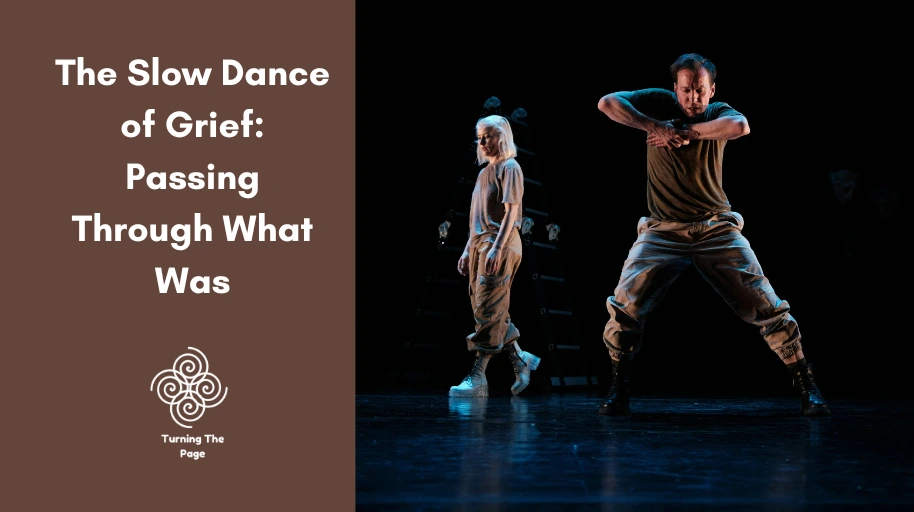

God, will it always be like this? That was what their heart was wanting to know. The answer lay in knowing their slavemaster of despair. Hope is the dance partner of Faith and Love.
In this post
Every day felt the same. In fact, every week and every month. Do the job, make a meal, go to sleep: repeat, repeat, repeat — monotonous drudgery.
It wasn’t just the repetitive nature of the grind that got to you; it was the slow wearing down of the soul.
It was like something beautiful and purposeful was being scraped off a ‘Mona Lisa,’ dropped on the floor, trampled on, and ground into dust.
They sensed they were losing themselves. Who they were, who they were meant to be — all at the hands of a slavemaster tyrant. Left unchecked, that kind of grind can slide into a suffocating despair in the darkest of valleys.
What Is Your Slavemaster?
What keeps you stuck? What keeps you in the same mental health time zone?
That hole of depression. That tightrope of anxiety.
For a nation of people, it was the oppression of an Egyptian slavemaster. They were building a man’s glory while destroying their own.
That was the lot of the nation of Israel. Slaves to Pharaoh. Brickmakers day in, day out.
So they [the Egyptians] organized them into work-gangs and put them to hard labor under gang-foremen.
They built the storage cities Pithom and Rameses for Pharaoh. But the harder the Egyptians worked them, the more children the Israelites had—children everywhere!
The Egyptians got so they couldn’t stand the Israelites and treated them worse than ever, crushing them with slave labor.
They made them miserable with hard labor—making bricks and mortar and back-breaking work in the fields.
They piled on the work, crushing them under the cruel workload. Exodus 1:11-14 (The Message)
It’s easy to identify an external slavemaster.
It’s their fault. They are the ones to blame. They are the ones who are making my life miserable. It’s so easy to give others more power than God ever wanted them to have.
Yes, some people are controllers; they like to be slavemasters, dominating and oppressing. They, too, are trapped in their fears.
Locus of Control: What Does Your Focus Say?
There is an interesting psychological concept called locus of control.
Locus of control is the degree to which people believe that they have control over the outcome of events in their lives, as opposed to external forces beyond their control. Understanding of the concept was developed by Julian B. Rotter in 1954, and has since become an aspect of personality studies.
A person’s “locus” (plural “loci,” Latin for “place” or “location”) is conceptualized as internal (a belief that one can control one’s own life) or external (a belief that life is controlled by outside factors which the person cannot influence, or that chance or fate controls their lives).
Individuals with a strong internal locus of control believe events in their life derive primarily from their own actions: for example, when receiving exam results, people with an internal locus of control tend to praise or blame themselves and their abilities. People with a strong external locus of control tend to praise or blame external factors such as the teacher or the exam. Wikipedia, Locus of control
What does your focus tell you about your locus?
I have found in myself and others that focusing on how other people treat you (external locus) takes away a sense of personal power — something many men describe when they talk about why male depression can feel impotent and weightless. You give the other more power than they need to have.
We can even do this with God. Blaming God for our circumstances instead of taking healthy responsibility for our own choices — or using God to avoid them altogether, a spiritual bypass that can harm your mental health.
Oh yes, and we can blame the devil. ‘The devil made me buy this dress’ by Flip Wilson springs to mind (must listen!).
There has to be a time when you come to an internal locus of control. What can I do? What do I have control over?
Crying Out: When You’ve Had Enough
There comes a time when you have had enough of being a slave.
The slavery of a belief you have held in your brain. A Pharaoh-sized belief is keeping you in captivity. You recognize that there is some internal thinking work you need to do.
No one else can do this for you. It’s your brain, your responsibility, 100%.
You cry out in prayer because you realize that this is too big for you to do by yourself.
Supernatural goals need supernatural resources. Larry Crabb
You sense yourself as being like those Israelites.
God Listens, Remembers, Sees, and Understands
The Israelites groaned under their slavery and cried out. Their cries for relief from their hard labor ascended to God:
God listened to their groanings.
God remembered his covenant with Abraham, with Isaac, and with Jacob.
God saw what was going on with Israel.
God understood. Exodus 2:23-25 (The Message)
Then God moves (Exodus 3).
Finding Your Moses
God moves toward a man on the run. A man also trapped and enslaved by his beliefs. Moses had been living in the desert for 40 years. He had killed an Egyptian slavemaster and fled.
Forty years of being shaped by both the harshness and the beauty of the wilderness. Bruce Cockburn’s song “Forty Years in the Wilderness” captures that long, slow shaping beautifully.
We all need a Moses. Someone who will speak healing truth to our lies — the concoctions we have created in our minds that keep us enslaved.
It will be the Holy Spirit nudging, poking, prodding — the gentle allure of God drawing us to face the falsity.
I will talk to the Father, and he’ll provide you another Friend so that you will always have someone with you. This Friend is the Spirit of Truth. Jesus, John 14:16-17
The words of encouragement will come through others. People who have a compelling vision for you that things can be different. Silence will be involved, where you have to both wrestle and dance with your own beliefs.
I, Barry, may also be involved. If I can, at the very least, pray for you, it would be a great privilege. Send me an email through the contact page.
If you are in crisis right now, please reach out today. In New Zealand, you can call or text 1737 any time to talk with a trained counsellor.
Will It Always Be Like This?
I don’t think so. History tells me that change happens, even if mental health recovery takes time and patience. Hope is the dance partner of Faith and Love, so let’s keep seeing where this leads.
Quotes to Consider
- Despair is what happens when there is a lack of new creation. When things just are what they are and there is a deep sense of impotence that there is nothing you can do about it. Rob Bell, Episode 219 | Jesus H. Christ – Part 9
- Despair is a spiritual condition. Despair is when you fall under the belief and conviction that tomorrow will simply be a repeat of today. Rob Bell
- Without the inner discipline of faith, most lives end in negativity, blaming, or deep cynicism—without even knowing it. Richard Rohr, Eager to Love: The Alternative Way of Francis of Assisi, p. 24
- Faith is not the clinging to a shrine but an endless pilgrimage of the heart. Abraham Joshua Heschel
- When you are no longer able to change, what will God do with you, if you have not yet become what He wants? D. Riddell
- God does not love you if and when you change. God loves you so that you can change. Richard Rohr
- Don’t judge the future by the past – the future will be different when new insights and understandings restore hope. David Riddell
Questions to Answer
- What beliefs are keeping you enslaved?
- What’s it like to know God listens to your groans, remembers the promises, sees your plight, and understands?
- What would ‘God moving’ into your situation look like? Would you like an ‘on the run’ convict to be your advocate or rescuer?
Further Reading
- The 3 Lies of “I Can’t,” “They Can’t” and “I Won’t” — The worst lies are the lies we tell ourselves. Can’t is really won’t, but ‘Can’t’ can become ‘Can’. ‘Won’t’ can become ‘Why not try’.
- The Inner Groan: Why Do I Feel So Broken Inside? — Feeling broken inside? Discover the birth pangs metaphor from Romans 8 and find hope in the sacred waiting between now and not yet.
- What’s on the Throne? What is Keeping you Anxious? — Who is on the throne of your life? Explore how serving the “charms” of status and opinion triggers anxiety and how to find peace in Christ.
- When You’re Feeling Stuck in a Dark Hole — Stuck in a dark hole? Discover how the “Bird’s Nest” of community and the power of encouragement can pull you out of life’s deepest mud pits.
- Hope and Mental Health — Is hope just wishful thinking? Discover how hope acts as a cognitive process and a spiritual anchor to help you navigate mental health.
- God is Going against the Grain and it’s Terribly Good — Discover how God gently works against the grain of our old beliefs to reshape our thinking and heal our hearts through divine intervention.
Written by Barry Pearman, who has spent almost 30 years as a mental health support worker, community chaplain, and pastor, and has walked through depression himself. His training includes SoulCare Foundations under Dr Larry Crabb, a Bachelor of Applied Theology, spiritual direction training, and certificates in CBT interventions, pastoral therapy, and integrated mental health care. Turning the Page offers a grace-filled path to mental wholeness through faith and hope.