
A guest post by Sónia Monteiro, who writes from her own lived experience of depression and schizophrenia.
Ever found yourself in a dark place? A simple state of sadness can throw you into one. At least, I experience that often.
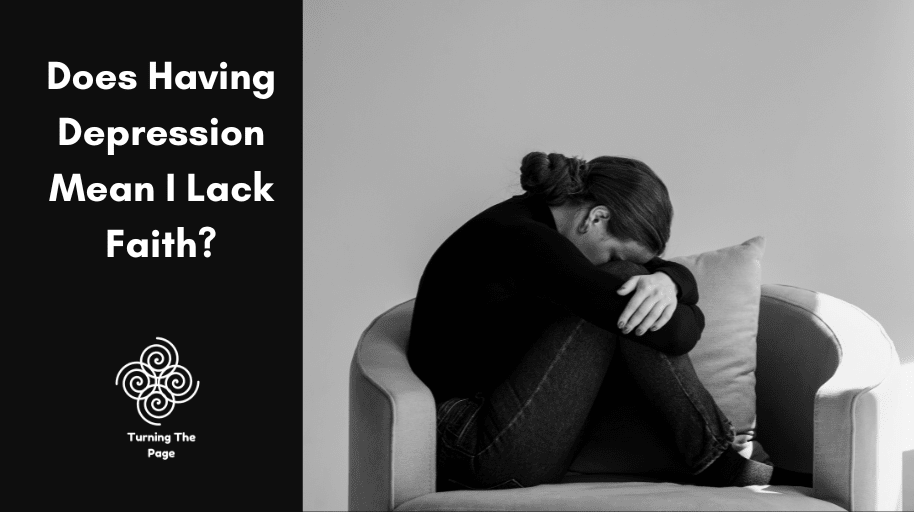
I used to be depressed, severely depressed: the kind of state that makes it hard for your facial muscles to respond to other people’s joy. Know the feeling?
In this post
When sadness becomes a dark place
Another sign that confirms my sadness is when I walk through the yard after dark with the lights out. The dark strikes me as even darker as it merges with the sadness inside, despite a wonderfully star-lit sky.
I often feel peace looking up at the stars. The sight of them makes me feel as if I’m in the company of close friends, and closer to where I belong.
In my understanding, sadness happens as a reaction to our social living. A tone of voice can be the simple trigger for sadness in a sensitive heart. A broken relationship, or the absence of a loved one, can easily throw you into a dark place. (Barry has written about why it’s OK to be sad and how grace is offered in it.)
Self-care as emotional fasting
I’ve learnt not to ignore my sadness, but it wasn’t always like this. Over time I learnt to acknowledge my inner state and respond with some self-care actions. Washing my hair often helps. Or trimming my nails. These are very simple daily actions that can have an impact on how I feel. Do you have your own self-care actions sorted out for the darker days?
I often think of the time I find myself in the dark as a time of fasting. Not that I actually fast the sadness away, but my state of sadness is equivalent to fasting.
In a way it makes sense, as sadness prevents you from engaging in day-to-day joyful fuzziness. It’s a kind of emotional fasting.
The Bible’s advice for such days of fasting includes self-care actions.
However forced or uninformed you may think my reading of the Bible is, it can’t do us wrong to know, maybe even feel, that God is looking after us on the lesser days, when we might feel put aside and alone in our state of mind.
I find comfort in knowing God is looking after me. He is there washing my hair with me, giving me the strength to care for myself and eventually changing the darkness in my heart.
And then there is a promise: He will reward you. Do you think a change in the heart is a small thing to achieve? If so, you probably haven’t yet found the joy of renewed strength. But you will.
God welcomes our difficult feelings
When I was depressed I used to feel empty, and I worried that I wasn’t living with God in my heart. Later I realised that God is always with us, even when we don’t feel connected to Him. Especially when we don’t feel connected to Him, I would dare to say.
I thought that because I rejected my negative feelings, God rejected them too, but I was wrong. He welcomes our difficult states of mind. (See also sitting with sadness instead of running from it.)
Furthermore, negative feelings are not a reflection of God’s disapproval. He is like a good-hearted friend who promises to sit with us in the dark.
I’ll sit with you in the dark
There is a line, often attributed to Lewis Carroll’s Alice in Wonderland, that has stayed with me:
I often take these words as something God would say to me. He’s that generous, and more.
The Bible has an even stronger statement of God’s presence with us through the dark.
The darkness of anxiety and schizophrenia
I’m often in the dark not only with sadness but because I suffer the effects of anxiety related to my schizophrenia. This is a very different kind of darkness. It’s often a loss of my ability to reason, so that I can’t think straight without a lot of effort, even pain. That’s usually when fear hits too.
When this happens, I like to be in places where I feel safe, where I can just sit and lean my head, or lie down comfortably, to release the strain more easily.
Are you able to lie down when you’re unwell without feeling guilty? That’s a good thing. Sometimes carers insist on the importance of keeping active, but there are times when you really do better to just stay put, lie down and relax.
When I lose my reasoning I find great comfort in having a trusted person around who can check on me if the crisis lasts longer than expected.
While I wait for the trouble to pass, I like to be visited by two kinds of thoughts: one, that the sun always shines after a long dark night; two, that there are limits to the intensity of one’s feelings or ideas.
In the end, I’m limited in my own capacity to feel pain. I believe that if happiness is often such a momentary feeling, then the same limit exists for whatever causes us suffering. (Barry explores this further in when the darkest valley becomes a suffocating despair.)
Letting someone sit with you
It’s not easy to go through darkness unattended. It helps to have someone around to keep you company, someone you’re bonded to by trust.
God has provided that for me, although it’s a bit awkward to rely on one’s mother for company in adulthood. I feel the sting of pride sometimes. But I prefer to see heaven’s work in my life than to keep my pride intact. The spiritual path is indeed very narrow for my pride-inflated self.
Here’s a statement I take with awe every time. The dark can keep you from even allowing someone by your side. That’s OK if you live in harmony with yourself, but it’s different if the cause of your solitude is a reluctant heart, if you find it difficult to choose between being alone and being in the company of another.
Maybe you think you’re better off alone. Sometimes I do too. But unless the company is toxic, it is better to have someone sit by you in the dark. That way the dark will not be as dark. (Read more on being known, not fixed, when you feel alone with your pain, and how God sets the lonely in families.)
Journaling after the crisis
When the crises are through, I usually spend some time journaling. I’ve found it a very helpful habit because it helps me escape the tension of my own thoughts and feelings. I discharge them as I write them down. Would you like to try that sometime? (Here are some ideas on how journaling can clear mental traffic.)
Through journaling, while analysing my emotions, I found the value of being patient and letting someone into my heart. There is much wisdom in that attitude. In fact, the Bible points in that direction.
God Himself waits for an opportunity to approach us with tenderness and care. He aims to keep our emotions in good shape. Would you find it a strange thing to talk to your emotions in order to understand them?
Here’s hoping you can remember that God is with you when you feel alone and in the dark.
Questions to answer
- What is the best attitude towards negative emotions?
- When does acknowledging and accepting negative emotions become a tool for better health?
- In what ways are our habits of thought and behaviour shaping our emotional life?
Further Reading
- No Fixing, No Advising: The Art of Listening Well
- Sitting Shiva: How to Be With Someone Who Is Grieving
- Embracing the Pain, Finding the Christ Light
About the author: Sónia Monteiro

Sónia was born and raised in central Portugal, in a small village next to the city of Coimbra, where she studied Journalism at the University. She became severely ill with depression before she could finish her studies. This was the beginning of a long journey towards healing. While she was able to come out of the depression, she was diagnosed with schizophrenia almost twenty years later.
In the meantime, she has worked as a caretaker for ill and elderly people. Recently she had to stop working due to complications of her illness, but had the opportunity to pursue an undergraduate degree in Modern Languages, including English.
About Turning the Page
Since 1995, Barry Pearman has worked as a mental health support worker, community chaplain, and pastor, and has walked through depression himself. His training includes SoulCare Foundations under Dr Larry Crabb, a Bachelor of Applied Theology, spiritual direction training, and certificates in CBT interventions, pastoral therapy, and integrated mental health care. Turning the Page offers a grace-filled path to mental wholeness through faith and hope.
Photo by Alex Vinogradov on Unsplash